Increased Hair Loss in Autumn: What Are the Causes and What Can Be Done?
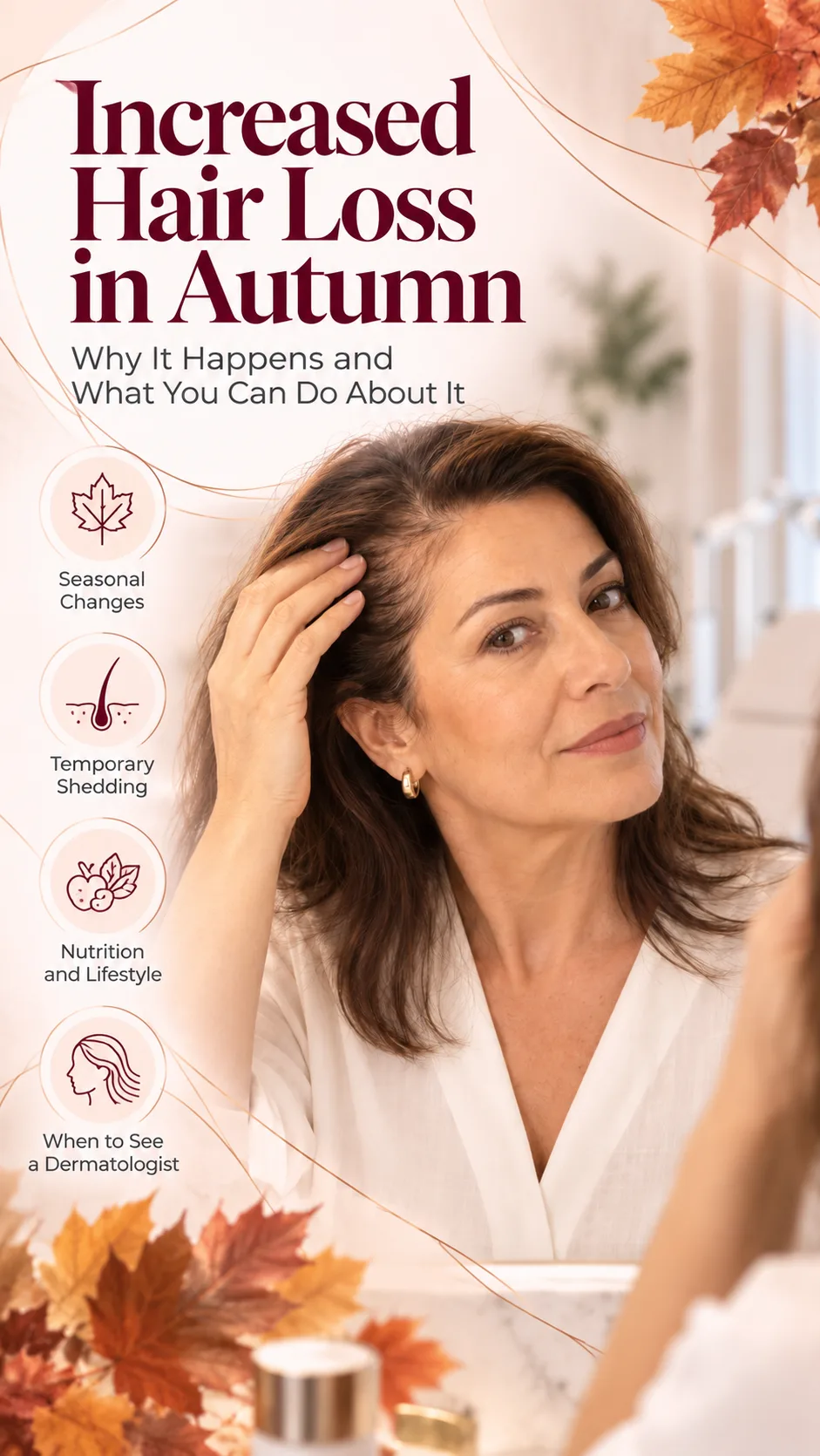
Have you noticed that your hair sheds more than usual during the autumn months? Seeing more hair than usual, especially while showering, combing your hair, or on your pillow, can be worrying. However, it is possible to experience a temporary increase in hair loss during seasonal transitions.
To understand the cause of hair loss, factors such as nutritional habits, stress, hormonal changes, and scalp health should be evaluated alongside seasonal changes.
In this guide prepared for individuals living in Antalya experiencing hair loss complaints in the autumn, we discuss the causes of seasonal hair loss, precautions that can be taken at home, and when it is necessary to consult a dermatology specialist.
Why Does Hair Loss Increase in Autumn?
Hair develops within a natural cycle consisting of growth, transition, and resting phases. At the end of this cycle, hair strands shed, and new hair is expected to emerge from the follicles.
Increased hair shedding during certain periods may be related to changes in the hair cycle. In some individuals, a temporary increase in shedding can be observed in late summer and autumn. However, not every instance of hair loss should be assumed to be seasonal.
1. Seasonal Changes
Changes in daylight duration and natural variations in the hair cycle may be associated with seasonal shedding increases in some people. This condition is usually temporary. However, if the shedding continues for a long time or visible thinning occurs, other causes should be investigated.
2. Stress and Intense Pace of Life
Physical or emotional stress can affect the hair cycle, leading to widespread hair loss. Hair loss may appear following situations such as an intense work pace, irregular sleep, past illnesses, surgeries, or rapid weight loss.
Stress-related shedding is often noticed not immediately after the triggering event, but usually a few months later. For this reason, changes experienced in the preceding months are as important as the period when the shedding began.
3. Nutritional Deficiencies
Healthy hair growth requires adequate energy, protein, and various micronutrients. Iron deficiency, insufficient protein intake, and deficiencies in certain nutritional elements can contribute to hair loss.
These factors should be evaluated especially in individuals who follow restrictive diets, lose a lot of weight in a short time, or have irregular eating habits. Rather than using random vitamin or mineral supplements, it is a more accurate approach to investigate deficiencies through a physician's evaluation and appropriate laboratory tests when deemed necessary.
4. Hormonal Changes and Health Issues
Thyroid diseases, hormonal shifts, and certain systemic health problems can cause hair loss. In women, the postpartum period, menopause, and some hormonal conditions can also affect hair density.
Hair loss related to genetic predisposition may be noticed during the same period as seasonal shedding. If there is a receding hairline, thinning in the crown area, or progressive thinning of hair strands, different types of hair loss should also be evaluated.
5. Scalp Issues and Hair Care Habits
Symptoms such as itching, redness, intense dandruff, or inflammation on the scalp may indicate certain skin diseases. Tightly tying the hair, intensive heat applications, and chemical procedures can also contribute to hair breakage or, in some cases, hair loss.
Hair breakage and shedding originating from the root are not the same thing. To determine the correct approach, it is important to evaluate the hair strands and the scalp together.
How Long Does Seasonal Hair Loss Last?
Hair loss thought to be seasonal is generally temporary. However, the duration varies from person to person, and it cannot be said with certainty that the shedding is seasonal just by looking at the calendar.
A dermatology specialist should be consulted if the shedding increases progressively, continues significantly for several months, results in a visible decrease in hair density, or if gaps appear on the scalp.
Especially in cases of sudden-onset heavy shedding or when symptoms such as pain, redness, crusting, or sores on the scalp accompany it, the evaluation should not be delayed.
What Can Be Done to Reduce Hair Loss in Autumn?
The cause of hair loss may not be the same for everyone. However, some basic habits are important to support hair and scalp health.
Eat a Balanced and Adequate Diet
Establish a balanced diet containing sufficient protein and covering various food groups. Adequate intake of iron and other nutritional elements is important for hair health.
Before using supplements, it is necessary to evaluate whether there is a need. Unnecessary or high-dose supplement use may not provide benefits and can pose certain health risks.
Be Gentle with Your Hair
Avoid harsh movements when combing your hair. Gently detangle wet hair, limit high-heat styling procedures, and take care not to tie hair tightly all the time.
Remember that every shampoo or care product claimed to prevent hair loss does not necessarily eliminate the underlying cause of the shedding.
Pay Attention to Stress and Sleep Patterns
Adequate sleep, regular physical activity, and stress management can support hair health alongside general health. However, if there is an underlying disease or nutritional deficiency, these habits alone may not be sufficient.
Monitor the Hair Loss
Observe when the shedding started, which areas it is concentrated in, and any accompanying symptoms. Photos taken at regular intervals with the same light and angle can help you compare changes in hair density.
If the shedding becomes prominent, do not settle for just changing cosmetic products; consult a dermatology specialist to evaluate the cause.
Dermatology Examination for Hair Loss in Antalya
For individuals experiencing hair loss in Antalya during the autumn months, the first step is to understand whether the shedding stems from a seasonal change or another cause.
During the dermatology examination, the onset, duration, and distribution of hair loss, family history, medications used, diet, and accompanying health problems are evaluated. When necessary, the scalp and hair strands can be examined in detail.
Depending on the physician's evaluation, blood counts, iron stores, thyroid functions, or other laboratory tests may be requested. Not every patient requires the same tests; investigations are planned according to personal findings.
Based on the cause of the hair loss, follow-up, care recommendations, or appropriate procedure options can be determined. The approach may differ between seasonal shedding, genetic hair loss, or loss due to another health issue.
You can plan a suitable examination for your hair loss complaints by obtaining information about dermatological evaluation from Assoc. Prof. Dr. Hüray Hügül’s clinic in Antalya.
Hair Loss in Children and Adolescents
Hair loss seen in children and adolescents should not be attributed solely to seasonal changes. If there is scaling, itching, circular patches, or broken hair strands on the scalp, different causes may need to be investigated.
When hair loss is noticed in children, an evaluation should be sought from an appropriate health professional instead of using self-prescribed medication or supplements.
Frequently Asked Questions
Is hair loss in autumn normal?
Some individuals may experience a temporary increase in hair loss during the autumn period. However, shedding that is heavy, long-lasting, or causes significant thinning in the hair should be evaluated.
When does seasonal hair loss improve?
Seasonal shedding is usually temporary; however, the recovery time varies by individual. If shedding continues or increases, other causes should be investigated.
Which vitamins should be used for hair loss?
There is no single vitamin or supplement suitable for everyone. Iron, zinc, or other nutritional elements should be evaluated based on need and deficiency status. Supplement use should be planned upon a physician's recommendation.
Which doctor should be consulted for hair loss?
A dermatology specialist can be consulted to determine the cause of hair loss and plan the appropriate management.
When should hair loss be taken seriously?
A dermatological evaluation should not be delayed if there is sudden and heavy shedding, significant thinning of the hair, localized patches, or symptoms such as pain, redness, and crusting on the scalp.
Conclusion
Increased hair loss in autumn can be temporary and seasonal for some people. However, stress, nutritional deficiencies, hormonal changes, genetic predisposition, and scalp diseases can also cause shedding.
It is important to observe the duration of the hair loss and accompanying symptoms, maintain a balanced diet, and be gentle in hair care. If the shedding intensifies, lasts longer, or leads to a significant decrease in hair density, the most correct step is to seek an evaluation from a dermatology specialist.
This content is for informational purposes; it does not replace personal examination, diagnosis, or clinical care.