What is Hair Thinning in Women? What Causes It and How Can It Be Supported?
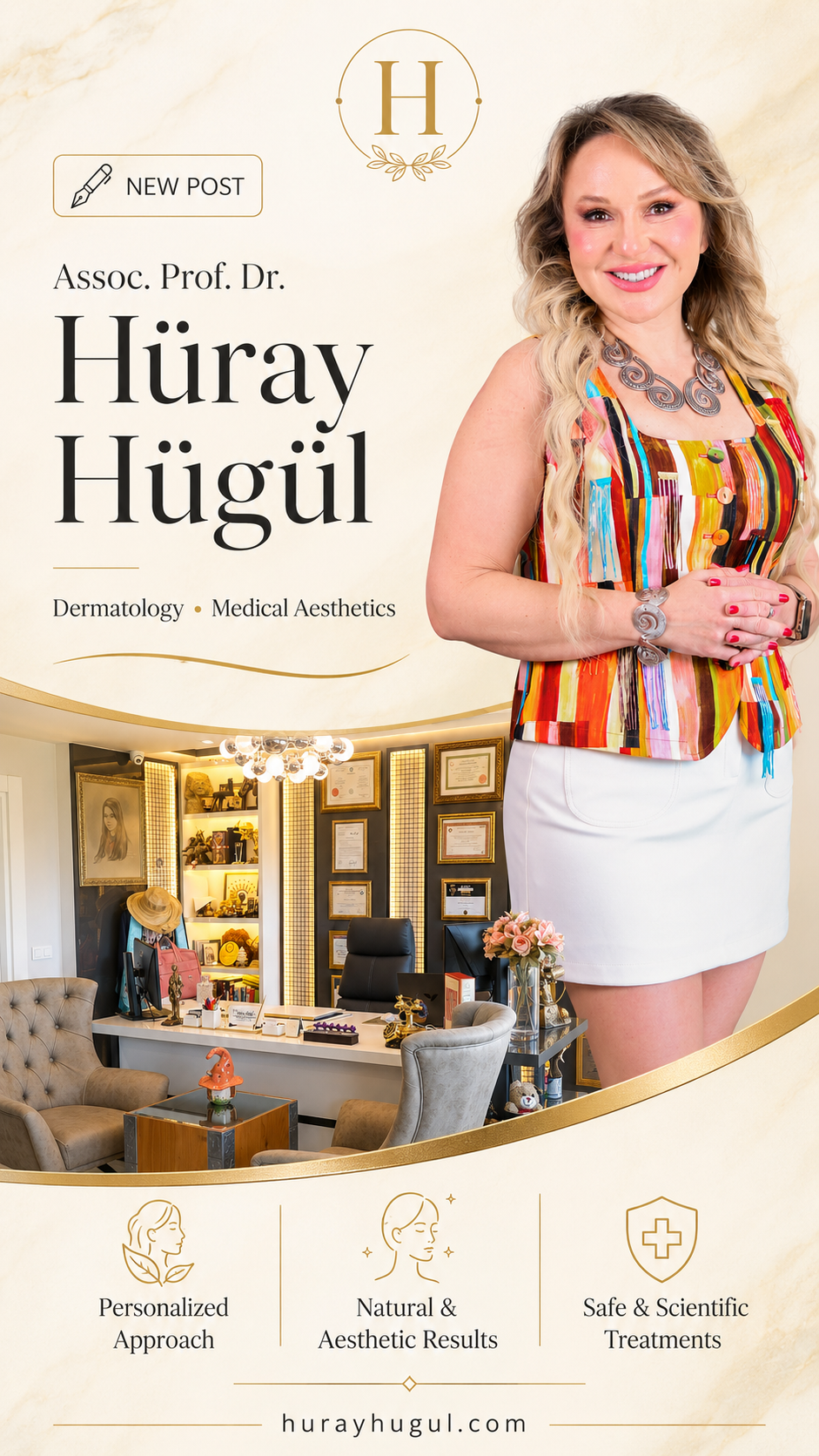
Hair Health
What is Hair Thinning in Women? What Causes it and How Can it be Supported?
Hair thinning in women is a multifactorial process linked to hormonal changes, genetic predisposition, stress, nutritional deficiencies, and scalp health. For an accurate approach, the cause of hair shedding must first be understood.
Information: Hair thinning may not be due to a single cause. At our Antalya clinic, the evaluation performed by Assoc. Prof. Hüray Hügül comprehensively addresses the type of hair shedding, the condition of the scalp, and the patient's general health history.
Hair thinning in women is a condition noticed by the thinning of hair strands, a decrease in hair density, a widening of the hair parting line, or the scalp becoming more visible. This process should not be considered merely an aesthetic concern. Hair is a structure highly sensitive to hormonal, metabolic, nutritional, and stress-related changes in the body.
While hair thinning progresses gradually in some women, it can appear as sudden and intense shedding in others. An increased amount of hair noticed in the shower, on pillows, in combs, or when tying hair, a significant decrease in hair density, or a widening of the hair parting line may require evaluation.
Therefore, when approaching hair thinning in women, not only the amount of shed hair should be considered, but also the duration of shedding, the condition of the scalp, the thickness of hair strands, the person's age, lifestyle, diet, and medical history.
What is Hair Thinning in Women?
Hair thinning in women occurs when hair follicles produce finer and weaker hair strands, leading to decreased hair density or a more visible scalp. Unlike male-pattern hair loss, women usually experience widespread thinning and loss of volume rather than completely bald areas.
The crown area, the hair parting line, and directly behind the front hairline are common areas where thinning is noticed in women. Hair strands may lose their previous thickness, hair volume may decrease, and individuals may feel less density when styling their hair.
Sometimes, hair thinning can be a temporary, seasonal shedding. In some cases, however, it can turn into a condition requiring longer-term follow-up due to genetic, hormonal, or chronic causes.
What Causes Hair Thinning in Women?
There isn't a single cause for hair thinning in women. Often, several factors coexist. Therefore, an effective approach requires first understanding the underlying causes.
Accurate planning for hair shedding begins with understanding which of these factors are at play for an individual. Therefore, personalized assessment is the most crucial step in hair care.
Female Pattern Hair Loss
Female pattern hair loss is one of the common causes of hair thinning in women. In this condition, genetic predisposition and hormonal sensitivity may play a combined role. Over time, hair follicles may start producing thinner, shorter, and weaker hair strands.
In female pattern hair loss, the hair parting line typically widens, density decreases in the crown area, and hair loses its previous volume. In most women, the hairline does not fully recede; however, the visibility of the scalp may increase.
Early assessment is important for this type of hair shedding. Because intervening in the process before hair follicles are completely weakened can help ensure more effective plans to preserve hair quality.
Periodic Intense Hair Shedding
In some women, hair shedding may increase several weeks or months after a specific event. Intense stress, febrile illness, rapid weight loss, postpartum period, surgery, severe infections, or certain medications can trigger this type of shedding.
In this situation, hair generally sheds diffusely from all over the head. Individuals may notice more hair than usual in the shower, in their comb, or on their pillow. In periodic shedding, identifying the underlying cause and supporting the scalp are important.
Not every intense shedding implies permanent hair loss. However, if the shedding persists for a long time, hair volume significantly decreases, or if there are symptoms such as itching, burning, or redness in the scalp, a physician's assessment is necessary.
Hair Thinning After Menopause
Menopause is one of the significant periods that can affect hair quality in women. Due to hormonal changes, hair strands may become thinner, drier, more brittle, and lack volume. In some individuals, the hair parting line becomes more prominent, while in others, overall hair density may decrease.
In post-menopausal hair thinning, not only scalp procedures but also nutrition, evaluation of deficiencies, stress management, sleep patterns, and hair care habits are important.
Therefore, a comprehensive assessment of hair shedding that begins during menopause helps create a healthier care plan.
Do Nutritional Deficiencies Affect Hair?
Hair strands are affected by the body's general nutritional and metabolic status. Specifically, low iron and ferritin levels, deficiencies in Vitamin D, B12, folate, zinc, and inadequate protein intake can negatively impact hair quality.
Rapid weight loss, long-term low-calorie diets, mono-diets, or protein deficiency can increase hair shedding. Therefore, blood values should be evaluated if deemed necessary in individuals experiencing hair thinning.
However, the important point here is to determine if there is a deficiency rather than using random supplements. Not all hair shedding is caused by vitamin deficiency; thus, accurate analysis is crucial.
Why is Scalp Health Important?
The environment where hair follicles are located directly affects hair quality. Oiliness, dandruff, seborrheic dermatitis, itching, sensitivity, flaking, or inflammation in the scalp can exacerbate the hair shedding process.
Therefore, when evaluating hair shedding, not only the hair strands but also the condition of the scalp should be considered. Applications performed without supporting scalp health may not yield sufficient results in some individuals.
If there is burning, pain, intense itching, crusting, wounds, acne-like lesions, or localized thinning on the scalp, evaluation should not be delayed.
How Do We Approach Hair Thinning in Women at Our Clinic?
At our Antalya clinic, following an evaluation by Assoc. Prof. Hüray Hügül, the type of hair shedding, the condition of the scalp, the individual's age, lifestyle, medical history, and expectations are considered together.
The aim is not to approach hair shedding with a single procedure but to create a phased plan that understands the cause, supports scalp health, and preserves hair quality.
For suitable patients, hair mesotherapy, PRP, scalp care, and advanced support protocols can be planned individually. Each application is assessed according to the person's needs and the cause of hair shedding.
Hair Mesotherapy
Hair mesotherapy is one of the aesthetic dermatology approaches that involves the microinjection of vitamins, minerals, amino acids, peptides, and supportive ingredients that the scalp may need.
For suitable patients, it can be planned to support scalp quality, help strengthen the microenvironment of hair follicles, and promote a healthier appearance of hair strands.
Hair mesotherapy can be considered alone or in combination with other supportive applications like PRP. The number of sessions and application intervals are determined according to the individual's needs.
PRP Hair Application
PRP involves applying plasma rich in platelets, obtained from the individual's own blood, to the scalp. In the field of hair shedding and hair thinning, it can be considered for suitable patients to support the microenvironment of hair follicles.
PRP hair application can be planned individually, especially in cases where hair strands are weakened, periodic shedding increases, or the scalp requires biological support.
In PRP application, the process is personalized as material obtained from the individual's own blood is used. Whether the application is suitable should be determined after examination.
Scalp Care
Scalp health is an important step in addressing hair shedding. Dandruff, oiliness, sensitivity, dryness, itching, or imbalances in the scalp barrier can affect hair quality.
Therefore, in some individuals, care and supportive approaches aimed at regulating the scalp environment may be necessary before applications such as hair mesotherapy or PRP.
Scalp care should be planned according to the individual's scalp structure, complaints, and co-existing conditions.
Advanced Support Protocols
In some individuals, hair shedding can be more intense, long-lasting, or multifactorial. In such cases, in addition to hair mesotherapy, PRP, and scalp care, advanced support protocols may be considered.
Such applications should be planned taking into account the individual's type of hair shedding, the condition of the scalp, medical history, and expectations. The same protocol is not suitable for every patient.
The correct care approach begins by understanding the cause of hair shedding before selecting a specific procedure.
When are Results Evaluated in Hair Care?
The process in hair care requires patience. Due to the hair growth cycle, the effects of applications are often evaluated in months rather than weeks. Therefore, regular follow-up and control photographs are important.
The individual's cause of hair shedding, age, hormonal status, diet, stress level, and scalp health can influence the outcome. For this reason, realistic expectations and regular follow-up are important parts of the hair thinning care process.
The goal is not always to achieve results in a single session, but to create a sustainable and personalized plan that supports hair quality.
Home Care and Follow-up Process
In hair shedding, home care habits are as important as clinical applications. Frequency of hair washing, shampoos used, heat applications, frequency of hair dyeing, nutrition, and stress levels can affect the process.
After a physician's assessment, personalized home care recommendations and a follow-up plan can be created. When necessary, referrals to relevant specialists may be made for blood values, deficiencies, or co-existing health problems.
Success in hair care is linked not to a single application but to accurate assessment, regular follow-up, and personalized planning.
Frequently Asked Questions
What causes hair thinning in women?
Hair thinning in women can occur due to hormonal changes, genetic predisposition, stress, nutritional deficiencies, thyroid problems, menopause, rapid weight loss, or scalp problems.
How is female pattern hair loss understood?
In female pattern hair loss, the hair parting line typically widens, hair density decreases in the crown area, and hair strands thin. A physician's examination is required for definitive assessment.
What is the role of hair mesotherapy in hair shedding?
Hair mesotherapy involves the microinjection of supportive ingredients into the scalp. For suitable patients, it can be planned to support scalp quality and the microenvironment of hair follicles.
Is PRP good for hair shedding?
PRP involves applying plasma rich in platelets, obtained from the individual's own blood, to the scalp. For suitable patients, it can be considered to support the microenvironment of hair follicles.
Is hair thinning normal after menopause?
During menopause, thinning, dryness, and reduced hair volume can be observed due to hormonal changes. However, if there is significant hair loss, it is important to evaluate the causes.
Are blood tests needed for hair shedding?
Not every patient requires the same tests. However, iron, ferritin, Vitamin D, B12, thyroid functions, and certain hormonal values can be evaluated in hair shedding when deemed necessary.
When will results be seen in hair care?
Due to the hair growth cycle, results are generally evaluated over time. The process can vary depending on the individual's cause of hair shedding, scalp health, lifestyle, and the applied protocol.
Can all hair shedding be resolved with PRP or mesotherapy?
No. The cause of hair shedding can vary. While PRP or mesotherapy can be supportive in some cases, in others, underlying illnesses or deficiencies need to be evaluated.
The First Step in Hair Thinning is Accurate Assessment
Hair thinning in women can be a multifactorial process. Therefore, the correct approach is to first understand the cause of shedding, and then create a personalized plan that supports scalp health and hair quality. At our Antalya clinic, the hair shedding process is addressed holistically through evaluation performed by Assoc. Prof. Hüray Hügül.
- kadında saç seyrelmesi
- kadınlarda saç dökülmesi
- saç dökülmesi Antalya
- Antalya saç dökülmesi tedavisi
- Doç. Dr. Hüray Hügül
- Hüray Hügül kliniği
- saç mezoterapisi
- PRP saç tedavisi
- saçlı deri bakımı
- kadın tipi saç dökülmesi
- menopoz sonrası saç dökülmesi
- saç ayrım çizgisi genişlemesi