Guide to Natural Expression in Periocular Aesthetics
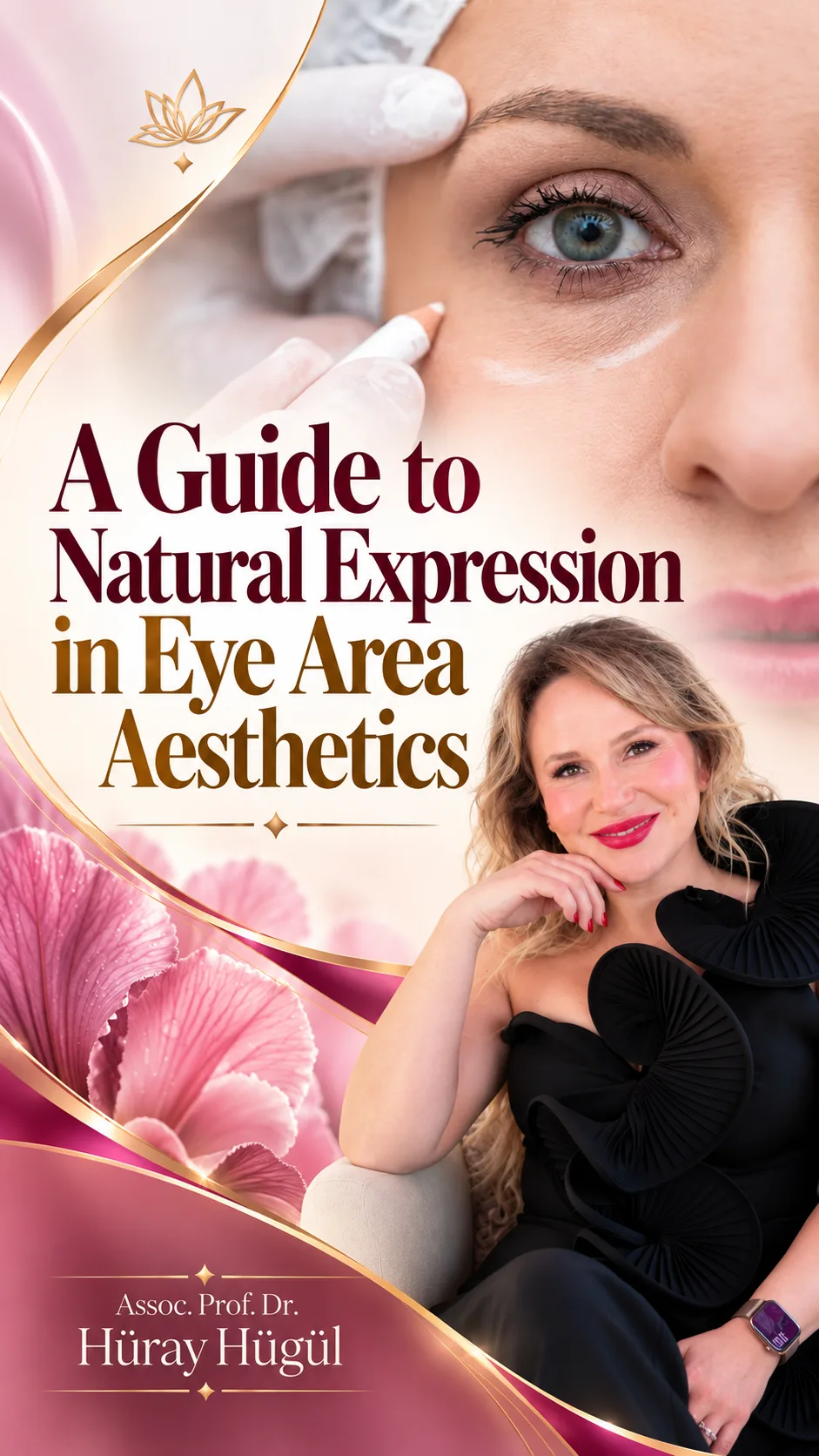
EYE EXPRESSION
The eye area is where facial expression is most read. In this region, the goal is not merely a more defined eye shape; it is to create a harmonious balance that naturally supports the gaze and is in accord with the overall face.
In this guide, we address the relationship between proportion and expression in the eye area, the considerations evaluated during planning, and how a natural outcome is preserved.
How is expression formed in the eye area?
Eye expression is formed by the combination of eyelid structure, eyebrow position, periorbital volume, and skin quality. The same eye shape can be perceived differently in two individuals with different eyebrow heights.
Therefore, in planning, the frame surrounding the eye is evaluated as much as the eye itself.
What considerations are evaluated in planning?
- Eyebrow position and eyebrow tail height.
- Relationship between the upper lid and eye opening.
- Volume and shadow appearance in the under-eye area.
- Cheek support and mid-face volume.
- Skin thickness and tissue elasticity.
Factors determining a natural outcome
A natural appearance is supported by preserving facial expressions, setting a goal compatible with the individual's own eye structure, and progressing gradually. Aiming for a significant change in a single instance with a high dose often detracts from the naturalness of the expression.
Natural facial asymmetries are not entirely sought to be eliminated; the goal is not to force symmetry but to improve balance.
What to expect during the recovery period
As the skin around the eyes is delicate, slight swelling or bruising may be observed. These findings usually subside quickly. Post-application recommendations vary according to the method and the individual.
When is it not suitable?
- If there is an active infection or inflammation in the area.
- If you are pregnant or breastfeeding.
- If there are conditions requiring separate evaluation, such as eyelid ptosis.
- If expectations cannot be met anatomically.
In these situations, the current condition is first clarified, and if necessary, an evaluation is made in conjunction with the relevant specialist.
Frequently Asked Questions
The most commonly asked questions about natural expression in eye area aesthetics.
1 What is aimed for in eye area planning?
The goal is a harmonious and balanced appearance that is in accord with the overall face, without distorting the eye expression.
2 Will the outcome look artificial?
A natural outcome is aimed for through suitable planning for the individual, a gradual approach, and the preservation of facial expressions.
3 Will there be bruising?
As the skin around the eyes is delicate, slight swelling or bruising may be observed; it usually subsides quickly.
4 Why is eyebrow position evaluated?
Eyebrow height and tail position directly affect the perception of eye openness, so they are included in the planning.
5 How long do the effects last?
The duration varies according to the method, area, and individual characteristics; a follow-up plan is determined during consultation.
6 Is under-eye shadow always due to volume loss?
No. Skin thickness, pigmentation, and vascular appearance can also be influential; therefore, differentiation is made through examination.
Let's Discuss the Planning Suitable for Your Gaze
The appropriate approach for the eye area is determined according to individual anatomy. You can contact our clinic for an evaluation and information.